Every word counts: The power of Translation Memory in patent translations
Words carry immense weight in the IP landscape. In patent applications and foreign filings, accuracy in language is everything. A great deal of time is spent drafting and architecting these documents, ensuring that every term is deliberate, every phrase airtight. When translations fail to align with this careful construction, the integrity of an entire application can be compromised.
For many corporations and law firms, translation costs play a critical role in international filing strategies. Some limit their jurisdictional reach, opting for countries that accept applications in their native language to reduce the expense. Translations can sometimes account for 50% more than the filing costs, making it one of the most significant line items in the filing process. But should global IP protection be dictated by budget constraints? Should cost considerations override strategic expansion into key markets? Cost should inform strategy, not limit it. The focus for filings should always be on choosing jurisdictions based on strategic value.
Beyond cost, errors in translation introduce another major risk. A single misinterpretation can weaken an application, leading to enforceability issues that only come to light when it’s too late. Leveraging the right tools and expertise not only enhances efficiency but also eliminates risks before they arise.
Up until a few years ago, translations were simply a case of human-only efforts where linguists would take on the translations, followed by expert reviews for accuracy. While this still remains the preferred choice for some, or for those who lack technology-assisted capabilities due to their size or other barriers, it is not always the most cost-effective way to manage translations.
How Machine Translations and Translation Memory work together
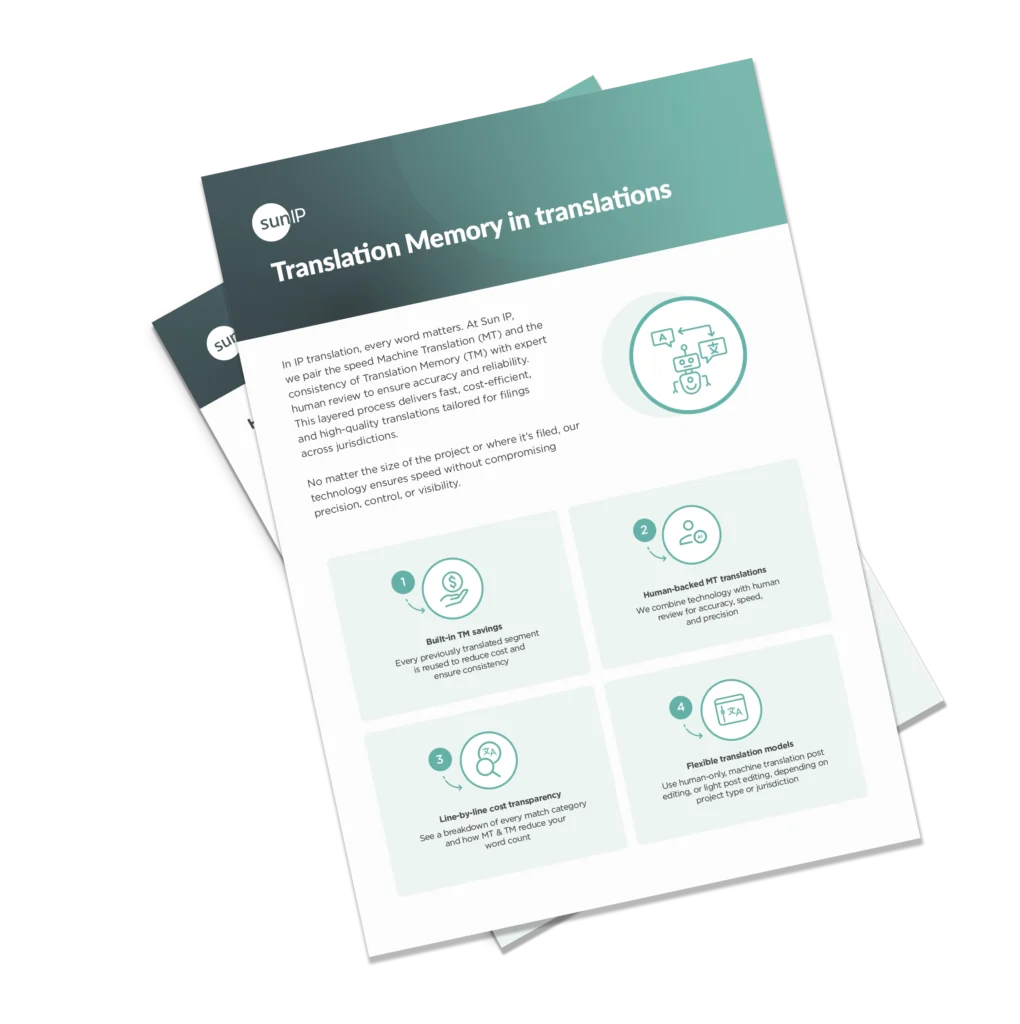
Technology has transformed the translation landscape. Translation memory (TM) and machine translations (MT) are now playing a critical role in improving accuracy and reducing costs.
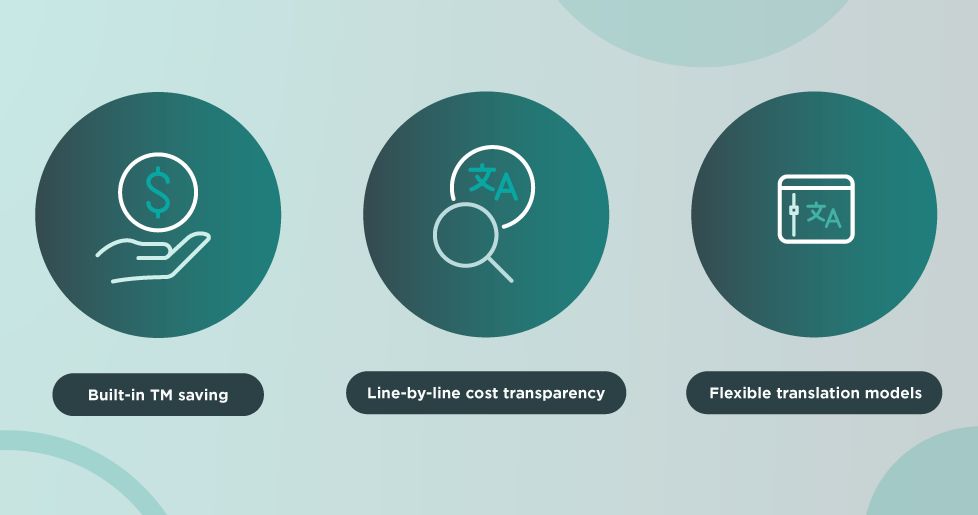
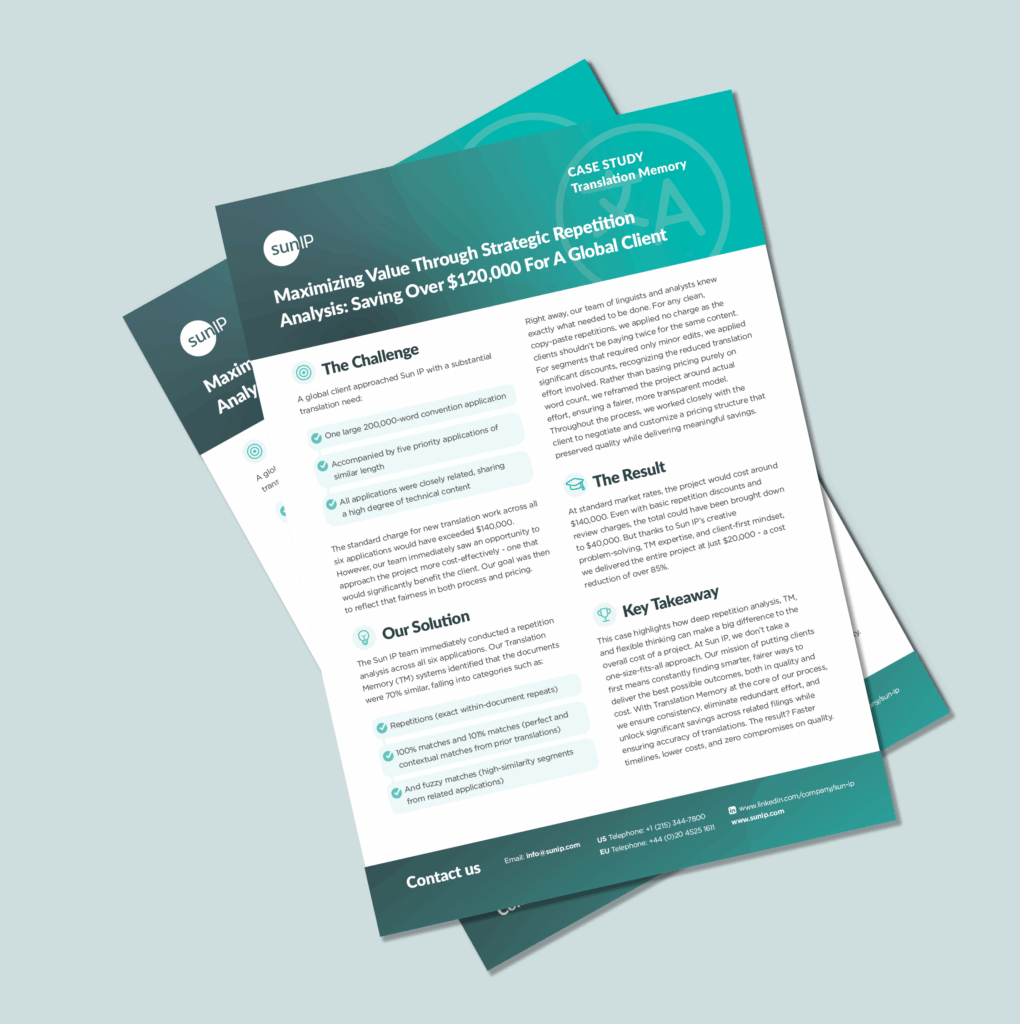
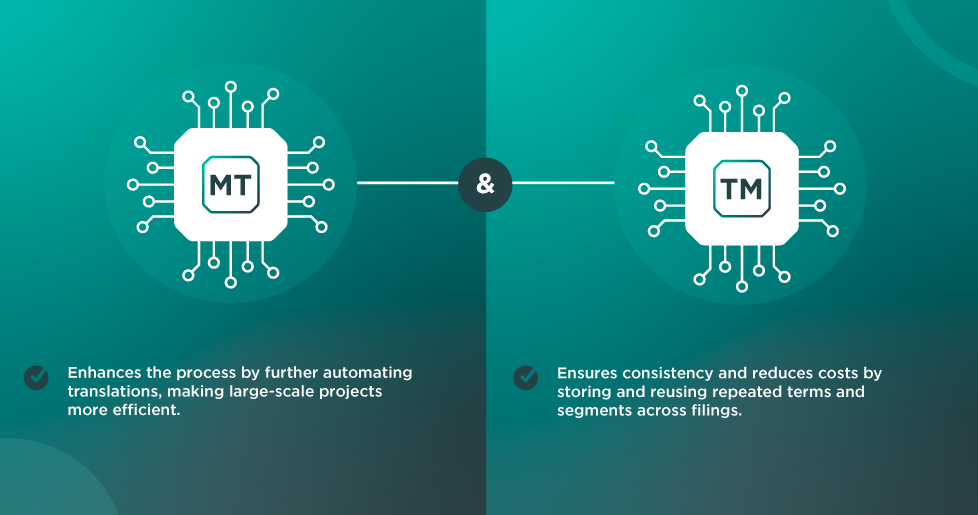
At its core, TM is a system that recognizes repetition within and across documents, ensuring consistency in terminology while lowering costs. Patent applications and other legal documents often contain repetitive phrases, standard clauses, and technical terminology that appear multiple times within a single document or across multiple applications. TM captures and stores these repeated segments, allowing them to be reused – ensuring consistency, reducing manual effort, and eliminating unnecessary costs.
Machine translations enhance this process by further automating translations, making large-scale projects more efficient. The combination of MT with TM results in a simplified, intelligent translation process that adapts over time, learning from previous applications to enhance accuracy. ensuring accuracy of translations. The result? Faster timelines, lower costs, and zero compromises on quality.
Building a stronger IP foundation with technology
Whether translating a single patent application or hundreds, having a structured TM database is invaluable. The benefits extend far beyond a single filing. When a new or related application is translated, the stored data ensures that all terminology remains accurate and consistent. Over time, this builds a stronger foundation for IP filings, improving quality while significantly cutting costs. And when you add another layer of human oversight, the combination becomes even more powerful – balancing technology’s efficiency with human precision. Translators and patent experts review machine translation content to ensure that nuances, legal interpretations, and industry-specific terminology are accurately applied.
On the other hand, in cases like Unitary Patents, an option is to submit translations that are entirely machine-generated with light post-editing and quality analysis. These translations, often lower in quality, are intended for informational purposes only and have no legal effect. However, poor-quality translations could still impact clarity and enforceability. Achieving efficiency without compromising quality is only possible through technology-assisted translation. In such scenarios, translation memory and machine translations play a crucial role in helping maintain quality while significantly reducing costs.
In short, with the right approach, translations can meet the highest standards while keeping the costs predictable and manageable. There are no tradeoffs – only benefits. Investing in a smarter process eliminates unnecessary risks, making global IP protection more accessible and reliable. By ensuring consistency across documents and eliminating redundant charges for repeated text, this approach strengthens both the financial and strategic aspects of IP management.
A smarter, simpler approach to IP translations with Sun IP
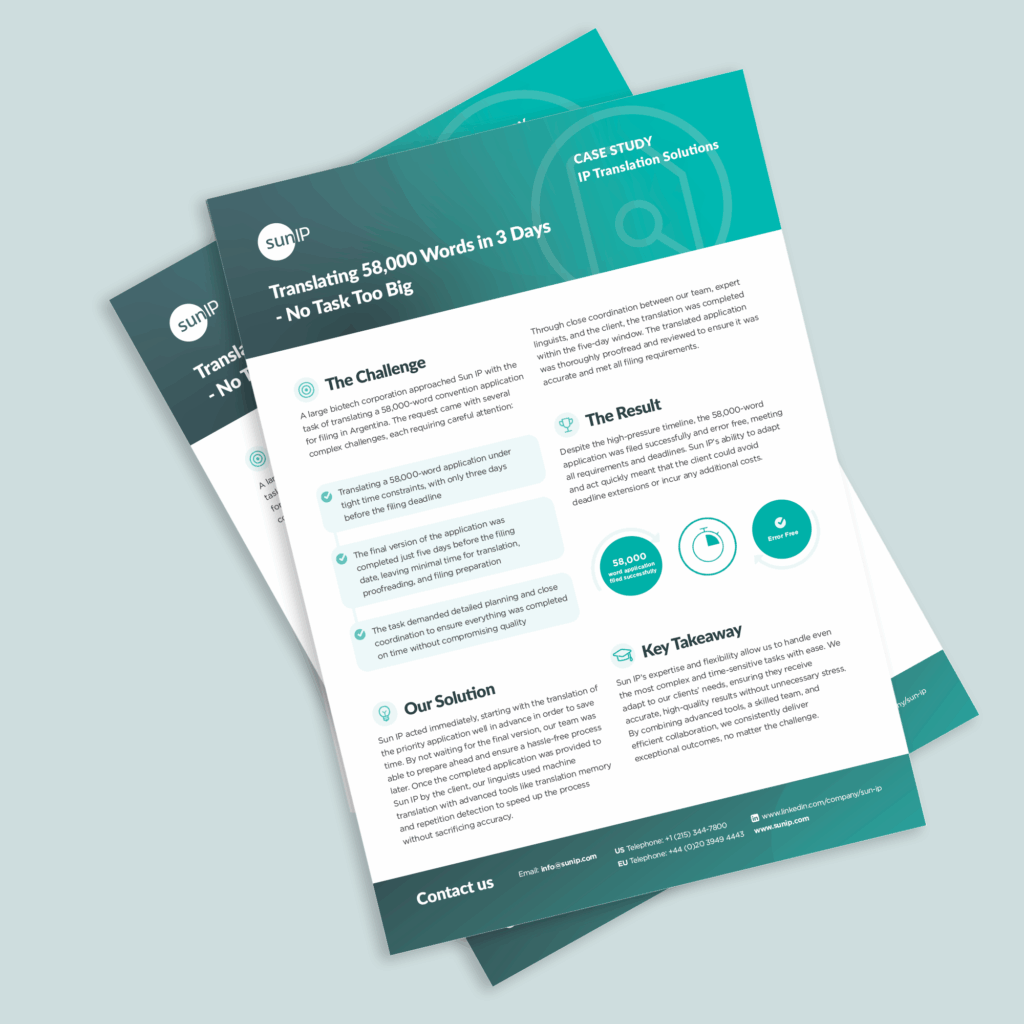
At Sun IP, this is the foundation of our approach. A seamless, intelligent, and expert-backed translation process ensuring that IP filings remain strong across jurisdictions. We offer a full spectrum of translation solutions to suit our clients’ needs, including human translation, machine-assisted translation with human review (Machine Translation Post-Editing – MTPE), and raw machine translation with light post editing and quality analysis. This flexibility allows us to balance cost with quality, ensuring the right level of accuracy for every project.
Competitive pricing with accurate word counting and translation memory means we can also offer you some of the lowest rates in the industry. In the case of MTPE, the technology is also supported by our native-speaking, in-country linguists and proofreaders who hold advanced degrees and combine subject-matter expertise with extensive experience.
So, why choose between quality and cost when both can be achieved? With the right strategy, it’s a win-win situation – no compromises, no losses, only better results.